

Alarming gap: Over a third of people cannot act on a disaster warning, global poll finds
Alarming World Risk Poll finds over a third of people who got a disaster warning could not act. Household plans lifted action from 27% to 83%.
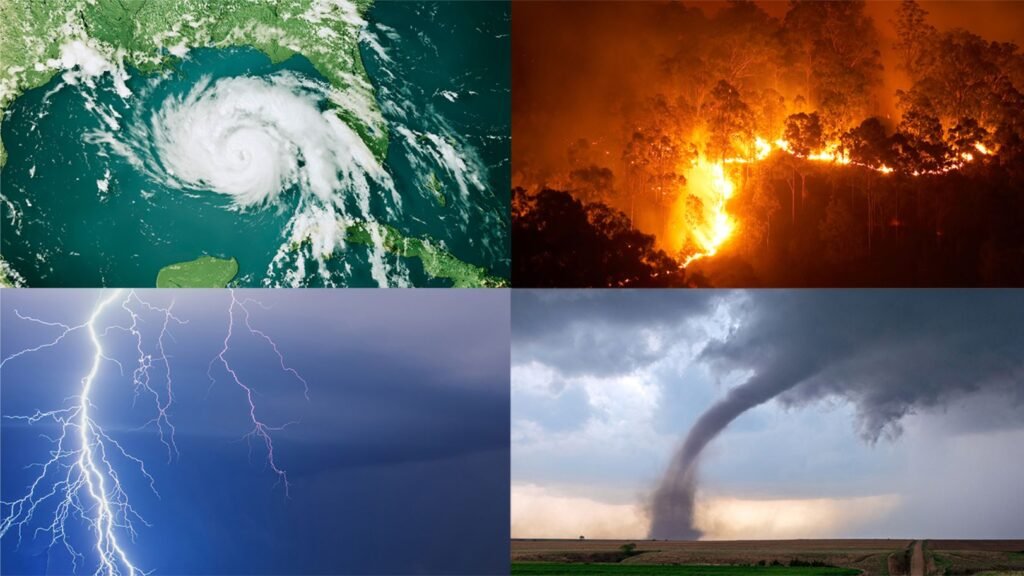
More than a third of people who received a disaster warning were unable to act before the disaster struck, according to a global poll released on Monday by Lloyd’s Register Foundation, a safety charity.
The gap between receiving a disaster warning and being able to respond is widest in low-income countries, where people are also most likely to be affected by disasters, the foundation said.
One in five adults, an estimated 1.1 billion people, has been affected by a disaster in the past five years. Almost 220 million of them received no warning at all, the report found.
The World Risk Poll report, “From alert to agency: What turns warnings into action?”, draws on more than 143,000 interviews conducted by Gallup across 140 countries and territories in 2025.
Fewer than half of warned adults in low- and lower-middle-income countries could act, compared with 71% in high-income countries, the report said.
Adults in low-income countries are almost twice as likely to be hit by a disaster as those in high-income countries, at 31% versus 16%, but less likely to be warned, at 64% versus 84%.
In Central and Western Africa, fewer than half of affected adults (47%) received any advance warning.
More than three-quarters (77%) of disaster-affected adults who got no warning own a mobile phone, equivalent to more than 170 million adults worldwide. The foundation called this a significant opportunity to expand warning coverage.
Using several channels, such as text messages, social media and television, made a disaster warning more effective. One channel prompted 37% of people to act, two channels 51% and three channels 64%, with smaller gains beyond three.
Having a household disaster plan and a sense of personal agency was linked to a jump in action from 27% to 83%.
“Four in five people affected by a disaster now receive warnings before it strikes. That’s real progress. But a warning is only as good as what people are able to do with it,” said Nancy Hey, director of evidence and insight at the foundation’s Global Safety Evidence Centre.
The findings come as countries work toward a United Nations goal of protecting everyone through early warning systems by the end of 2027.
Cosmas Zavazava, director of the International Telecommunication Union’s Telecommunication Development Bureau, urged governments to speed up adoption of cell broadcast, which sends location-specific alerts to phones within seconds without an app or registration.
Loretta Hieber Girardet of the U.N. Office for Disaster Risk Reduction said households could not build resilience alone and called for predictable, long-term financing for early warning efforts.
A companion report, “A resilient life,” found societal resilience reached a record 66 out of 100 on the poll’s Resilience Index, up from 63 in 2021, driven by trust in national institutions. Individual resilience fell to its lowest recorded level, 42, from 46, led by declining personal agency in India, Pakistan and Indonesia.
High-income countries scored lowest of any income group on societal resilience. The United States ranked second of 139 on individual and household resilience, but 130th on societal resilience.
Nearly three in 10 people (29%) feel their government does not care about them at all, rising to 44% in low-income and 45% in high-income countries.
More Stories


Related News
© 2026 CSR Voice. All Rights Reserved.
Powdered by © Snowchild Studio