

Beyond One-Time Plantations: Why CSR Must Invest in Living Forests
CSR in India has the potential to support meaningful ecological regeneration, but only if it shifts from annual plantation targets to multi-year restoration commitments.
By Kapil Sharma and Deokant Payasi
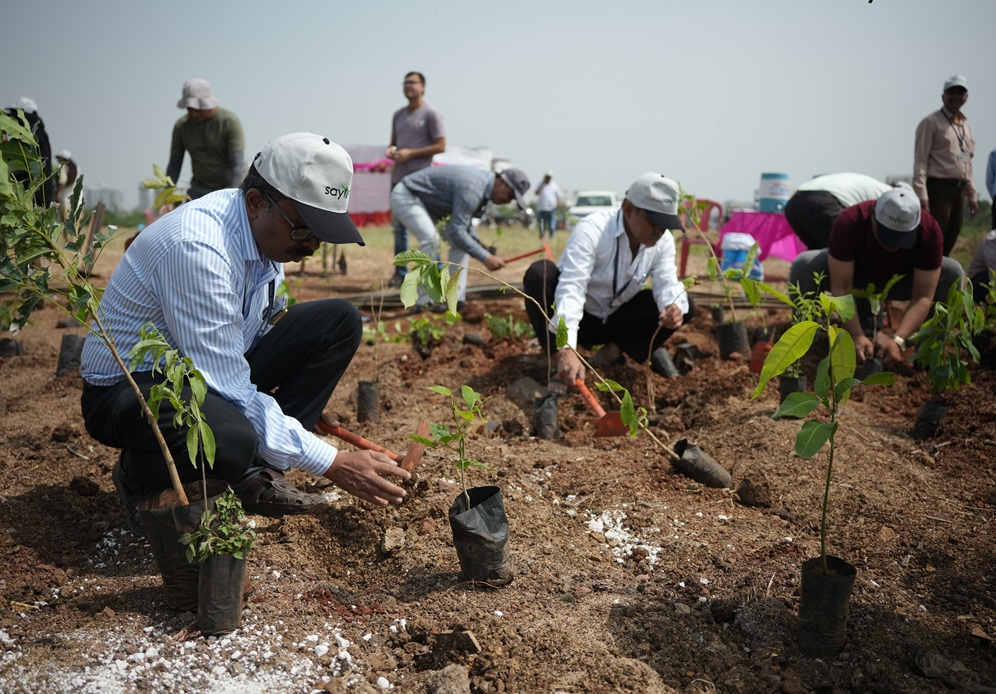
Every monsoon, plantation drives sweep across India. Corporate volunteers gather, saplings are planted, photographs are taken, and annual CSR reports celebrate impressive numbers.
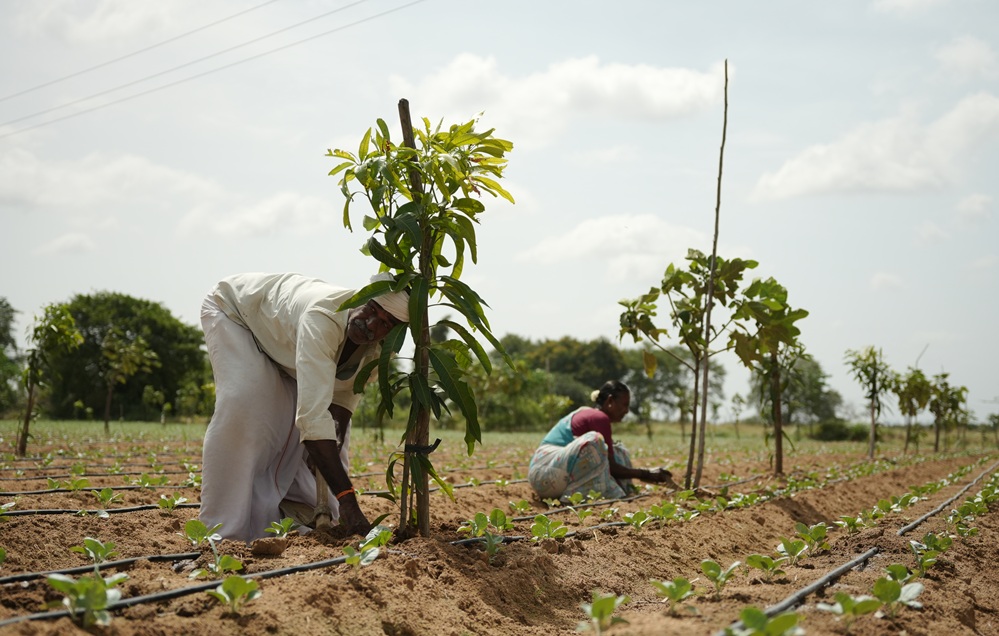
But after the cameras leave, the real question begins: how many of those saplings will survive five years later? Programs such as those implemented by SayTrees Environmental Trust demonstrate this shift, with over 9 million saplings planted across 20,000+ hectares of farmland supporting more than 25,000 farmers through agroforestry systems, capturing over 120,000–160,000 tonnes of CO₂ annually while improving soil health and farm resilience.
Planting a tree is the easiest part of the process. Protecting it, nurturing it, and allowing it to become part of a thriving ecosystem is the real work. And that work does not end with a plantation event, it begins there. Such agroforestry landscapes can capture over 120,000–160,000 tonnes of CO₂ annually while improving soil health and farm resilience.
India’s climate ambitions demand more than symbolic greening. They demand ecological integrity.
India has committed to creating an additional carbon sink of 2.5 to 3 billion tonnes of CO₂ equivalent by 2030 through increased forest and tree cover. Achieving this target cannot depend on plantation numbers alone, it requires ecosystems that survive and mature.
Recent debates around commercial plantations and forest leasing have renewed an old question: what qualifies as a forest? A plantation, especially one driven by short-term economic returns, is not automatically a forest. Forests are living systems composed of native species, layered canopies, soil microbiology, water cycles, and biodiversity networks that evolve over decades.
When restoration is reduced to numbers, ecological complexity is lost.
Across the country, survival rates of plantation drives often drop sharply after the first few years due to inadequate maintenance, poor species selection, water stress, grazing pressures, and lack of community engagement. Reviews of afforestation efforts by institutions such as the Comptroller and Auditor General (CAG) have pointed to gaps between plantation targets and long-term ecological outcomes. A sapling in the soil is only the first step in a 20-year ecological journey. Without protection and monitoring, it rarely becomes a mature canopy.
True climate resilience lies in diversity.
Fast-growing monocultures may deliver quick carbon metrics, but ecological research from the Indian Council of Forestry Research and Education (ICFRE) and global assessments by FAO show that biodiverse, mixed-species forests provide greater long-term resilience, better soil stability, and stronger ecosystem services than single-species plantations.
A living forest, particularly in urban and peri-urban landscapes, performs multiple functions simultaneously. According to research by the Forest Survey of India (FSI) and studies by institutions such as IISc Bengaluru, dense native tree cover can help moderate urban heat, reduce runoff during heavy rainfall, stabilise soil, and improve air quality. As Indian cities experience rising temperatures and more intense rainfall events, these ecological services are no longer optional, they are essential infrastructure.
But these benefits emerge only through thoughtful ecological design: native species diversity, multi-layered canopy planning, soil restoration, and long-term stewardship.
Equally critical is community partnership. Restoration efforts that exclude local communities rarely endure. Evidence from Joint Forest Management initiatives across India shows that when local communities participate in protection and monitoring, survival and regeneration outcomes improve significantly.
Ecological restoration is not merely a technical exercise; it is a long-term social commitment.
CSR in India has the potential to support meaningful ecological regeneration, but only if it shifts from annual plantation targets to multi-year restoration commitments. This means budgeting not only for saplings, but for maintenance, monitoring, and biodiversity support over five to ten years.
Climate action cannot be reduced to a photo opportunity.
India does not need more one-day plantation drives. It needs living forests, biodiverse, climate-resilient ecosystems that are designed to thrive long after the CSR cycle ends.
If corporate responsibility is to truly serve climate resilience in 2026 and beyond, the shift is clear: from planting trees to growing forests with life. Planting is an act. Growing is a commitment. And the future of India’s climate leadership depends on choosing the latter.
The writers are founder and co-founder of Bengaluru-based NGO SayTrees Environmental Trust.
More Stories



Related News
© 2026 CSR Voice. All Rights Reserved.
Powdered by © Snowchild Studio