

SAEL begins paddy straw procurement with 2 million tonne for biomass plants
SAEL begins paddy straw procurement of about 2 million tonnes to fuel 11 AgWTE plants, offering farmers an alternative to stubble burning in North India.
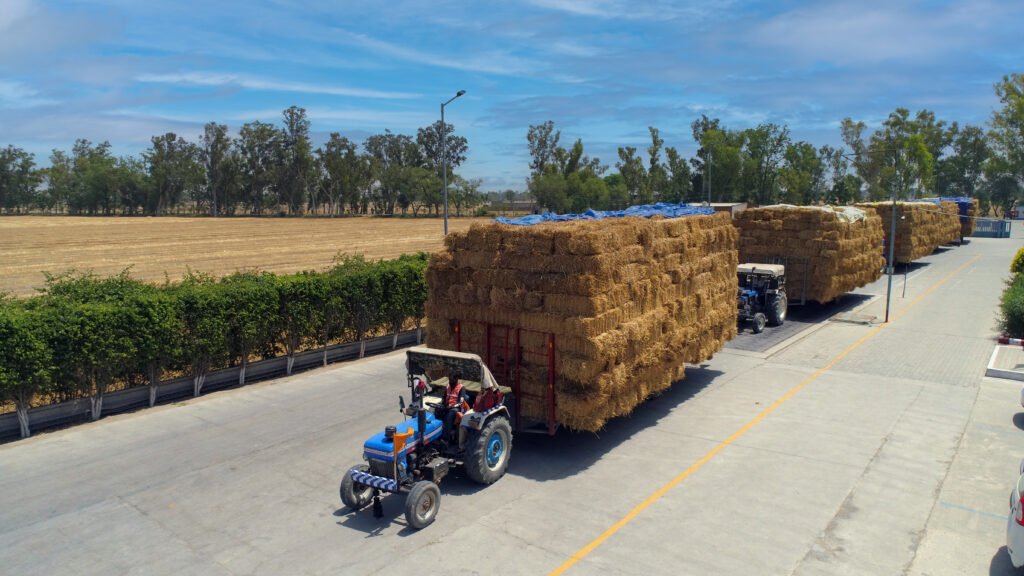
SAEL Industries Ltd, a vertically integrated renewable energy company, has begun paddy straw procurement of about 2 million tonnes (20 lakh tonnes) in phases, as the harvesting season gets under way in North India.
The annual feedstock drive will supply the company’s 11 agri waste-to-energy (AgWTE) plants, which have a combined capacity of 164.9 MW.
SAEL said the effort aims to strengthen the local rural supply chain and turn crop residue into renewable energy, supporting both the energy transition and pollution control.
The move comes as India shifts its response to crop-residue burning from monitoring incidents to building viable alternatives. In 2026, the Commission for Air Quality Management (CAQM) directed Punjab, Haryana and the NCR districts of Uttar Pradesh to implement action plans aimed at eliminating paddy-stubble burning entirely.
The plans combine field-level monitoring and access to residue-management machinery with a greater emphasis on ex-situ use of residue, including biomass power, pellets, briquettes and other industrial applications.
Government data show farm-fire incidents have begun to decline. The next challenge is to sustain that progress across districts by giving farmers timely, practical ways to manage residue in the short gap before the next crop is sown.
A study by the Council on Energy, Environment and Water (CEEW) found that about 90% of surveyed farmers personally disapproved of stubble burning. The practice persists less because of a lack of awareness than because of constraints on machinery, labour, cost, information and timing, the study indicated. With only 15-18 days between paddy harvesting and wheat sowing, dependable collection and assured offtake are critical to making non-burning options workable.
SAEL said its model links farmers with local aggregators and collection teams that gather and transport paddy straw to its energy facilities. The company said this gives farmers a route to manage residue after harvest, eases the logistical burden of clearing fields within the available window, and creates an additional income opportunity. It also aims to support rural employment.
“India is beginning to move beyond a view of considering paddy straw and other crop residues as a seasonal waste-management issue,” said Laxit Awla, CEO and Executive Director of SAEL Industries Limited.
“We are committed to continuing to support the farmer communities to adopt better ways of stubble management and extract the real economic value from it. Our AgWTE plants across Punjab, Rajasthan and Haryana are contributing to develop an impact on the economy, generating benefits through creating revenue streams from waste and reduction of fuel costs. Additionally, these projects stimulate local economic growth by creating employment opportunities in waste collection, processing and plant operation.”
More Stories


Related News
© 2026 CSR Voice. All Rights Reserved.
Powdered by © Snowchild Studio